Guide
Document Scanning for UK Accountancy Practices
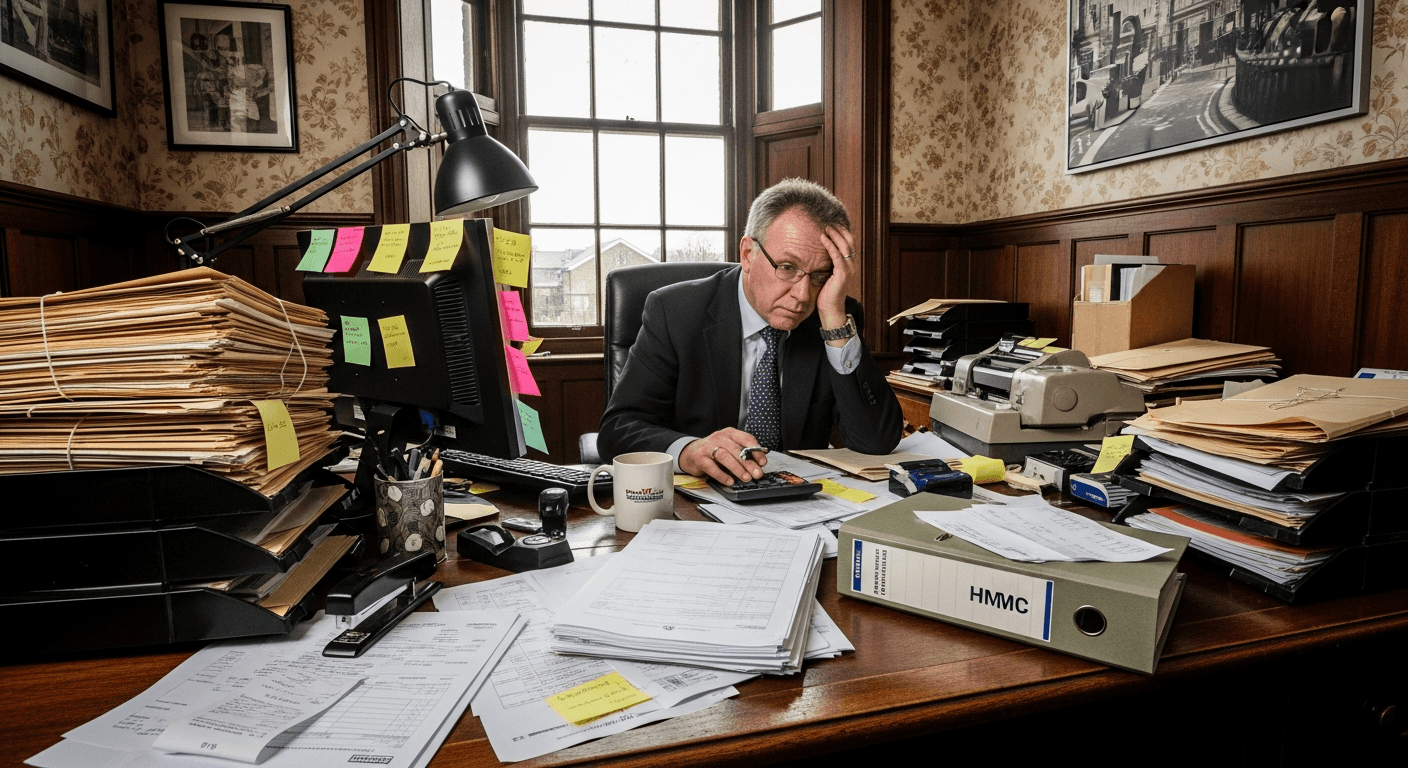
Accountancy practices handle vast volumes of paper — client records, bank statements, receipts, invoices, tax correspondence, and Companies House filings. Every document needs to be retained for a defined period, retrievable on demand, and secure. Scanning into a structured document management system transforms how practices manage this burden.
HMRC Six-Year Retention Requirement
HMRC requires businesses and their accountants to retain records for specific periods:
- Self-assessment records: 5 years after the 31 January submission deadline for that tax year (effectively ~6 years from the end of the tax year)
- Corporation tax records: 6 years from the end of the accounting period
- VAT records: 6 years (or 10 years for partial exemption methods)
- PAYE records: 3 years after the end of the tax year to which they relate
- CIS records: 3 years after the end of the tax year
HMRC explicitly accepts digital copies of records. Their guidance states: "You can keep records on paper, digitally or as part of a software program. You must be able to provide them to HMRC if asked." A scanned copy of an invoice or receipt has the same evidential standing as the paper original, provided it is legible and complete.
Making Tax Digital (MTD)
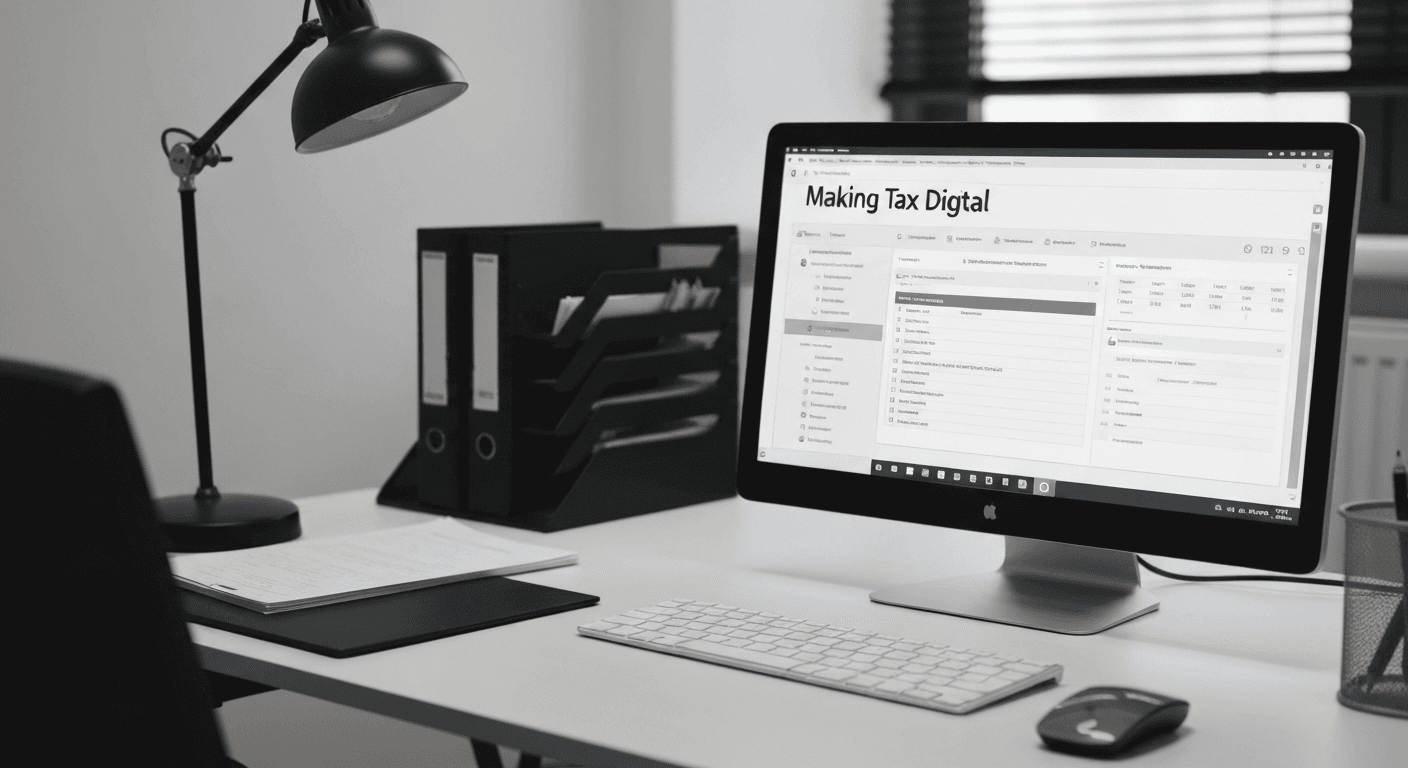
Making Tax Digital is driving the accountancy profession towards digital record-keeping whether firms are ready or not. MTD for VAT has been mandatory since April 2022 for all VAT-registered businesses. MTD for Income Tax Self-Assessment (ITSA) is being phased in from April 2026 for businesses and landlords with income over £50,000.
MTD doesn't require scanning specifically, but it requires digital records. For clients who still provide paper records — and many do — scanning is the bridge between paper and the digital record-keeping MTD demands. Practices that can offer a scanning service to clients add value and reduce the friction of MTD compliance.
Client Records Scanning Workflow
The most effective workflow for accountancy practices follows the client engagement cycle:
- Client onboarding: Scan engagement letters, proof of identity (anti-money laundering), and initial records into the client folder
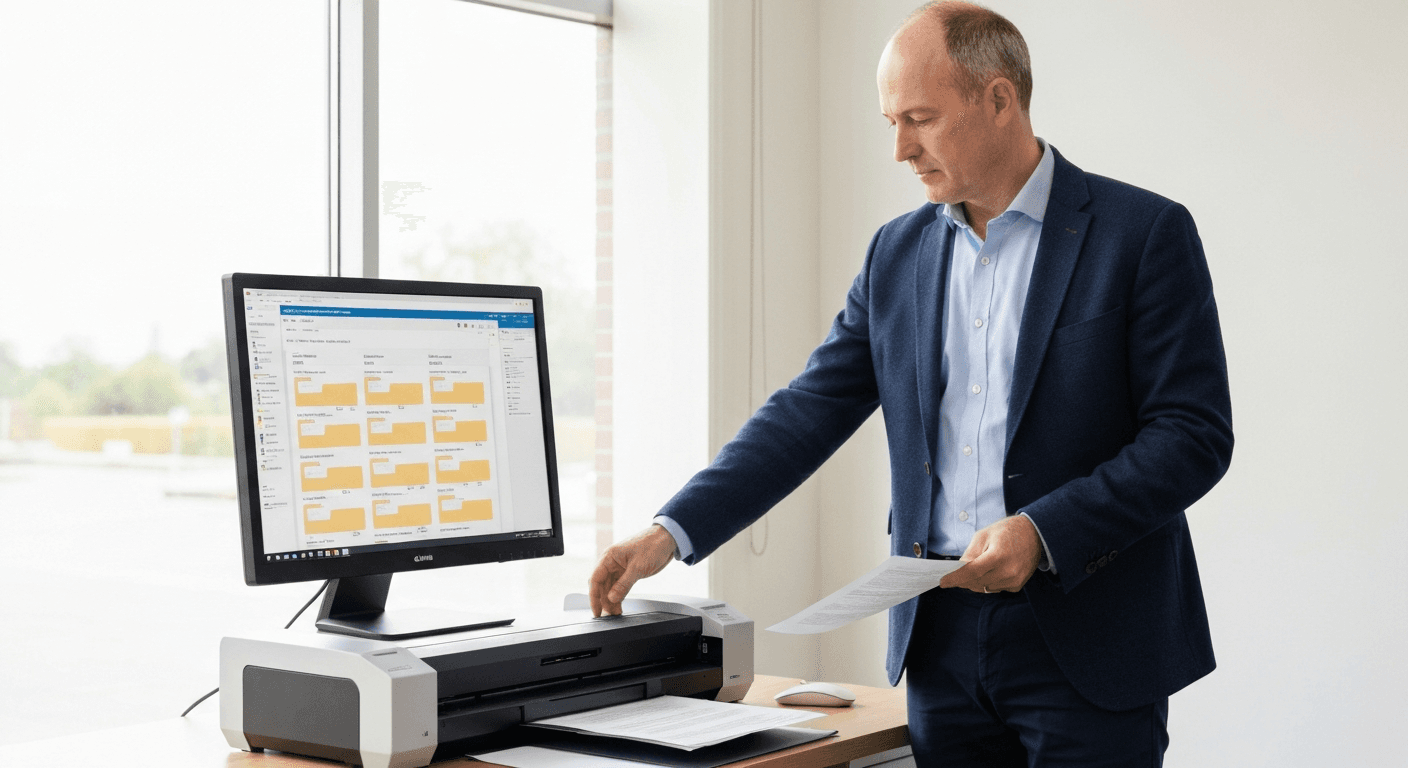
- Year-end document collection: When clients deliver their annual box of paperwork, scan everything on receipt. Tag each document with client code, document type, and tax year
- Working papers: As the engagement progresses, scan any paper working documents and file alongside digital files in the same client folder
- Final documents: Scan signed accounts, tax returns, and HMRC correspondence to the client file
- Archive: At year-end, the entire engagement file is complete in digital form — no need to box and store paper
ICAEW Guidance on Digital Records
The Institute of Chartered Accountants in England and Wales (ICAEW) supports the use of digital records. ICAEW's guidance on record retention states that firms should:
- Maintain records in a form that allows them to be produced to regulators on request
- Ensure digital records are backed up and protected from loss, corruption, or unauthorised access
- Retain engagement files for a minimum period appropriate to the nature of the engagement — typically 6 years, or longer for tax-related work where HMRC enquiry windows remain open
- Consider professional indemnity insurance requirements, which may specify longer retention periods
ACCA provides similar guidance for its members. Both bodies recognise that digital records, properly maintained, are preferable to paper for reliability, security, and accessibility.
Folder Structure for Accountancy Practices
A consistent client folder structure makes scanning efficient and retrieval reliable. Recommended structure:
- 01 - Engagement — engagement letter, terms of business, anti-money laundering verification
- 02 - Accounts — annual accounts, management accounts, trial balance
- 03 - Tax — corporation tax returns, self-assessment returns, HMRC correspondence
- 04 - VAT — VAT returns, supporting schedules, HMRC correspondence
- 05 - Payroll — RTI submissions, P60s, P11Ds, employment contracts
- 06 - Companies House — confirmation statements, Articles, board minutes
- 07 - Correspondence — client correspondence not specific to a work type
- 08 - Source Documents — scanned invoices, receipts, bank statements provided by the client
Each folder is replicated per tax year (e.g. Client Name → 2025-26 → sub-folders). This maps naturally to how accountants think about client records.
Scanning Client-Provided Records
The annual document collection — the client's carrier bag of receipts and invoices — is the scanning bottleneck for many practices. Speed and accuracy matter here:
- Batch scanning: A scanner with a 100-sheet ADF processes a client's annual records in minutes rather than hours
- OCR: Optical character recognition makes scanned invoices searchable by supplier name, amount, or date
- Auto-naming: Configure the scanner to name files by date and document type (e.g. 2025-03-15_Invoice_Supplier.pdf)
- Direct to SharePoint: Scanned documents go straight to the correct client folder — no saving to desktop, then uploading, then filing
Streamline your practice's document handling
See scanning solutions for accountancy and finance practices.
Finance Industry SolutionsGet in Touch